



by Claire Rose
I like to think of myself as someone with reasonably good taste. I am very intentional with my craft as a writer, I read widely and critically, I watch and rank the Oscar nominees every year like it’s my paying job (it’s not). I have strong opinions about Mitski albums, I shop secondhand where I can, I bake my own bread. So, naturally, I am writing to you today in defense of And Just Like That…
An official sequel to Sex and the City, And Just Like That… aired on HBO Max for three glorious, mesmeric seasons between 2021 and 2025, where it was met with immediate critical disdain. Maybe, you could argue, it’s because people don’t like seeing Women Of A Certain Age having full and fulfilling lives on television! Maybe it’s because Kim Cattrall was trapped in the How I Met Your Father house, taking Samantha with her! Maybe it’s because, in an attempt to remedy the glaring lack of diversity of the original series, the reboot at times swings so far in the other direction that, although clumsily well-intentioned, it comes across as self-parody! Maybe it’s because of Che Diaz! (I do not have the time, space, or energy to plumb the many layers of Che Diaz, but if you are unfamiliar with them or their comedy concerts, there are many, many think pieces already written.)
I will allow that on an objective, technical, generally being in touch with reality level, And Just Like That… is not good art. This is a show in which Carrie Bradshaw wears a cargo jumpsuit with ankle pockets and a plastic pigeon purse, Nathan Lane’s character dies of Covid offscreen, Mr. Big is killed by a Peloton bicycle, actor Willie Garson’s real-life death is accounted for by sending his character to be a TikTok manager in Japan, and Miranda gets her own initials tattooed on her wrist to reclaim her self-identity. But I am still obsessed with it, and not entirely in a brain-off-pretty-colors way.
The one character to get through this whole mess surprisingly unscathed is Kristin Davis’s Charlotte York Goldenblatt. Once a WASPy princess desperate for a perfect marriage, Charlotte has become the supportive, if uptight and out of touch, Jewish mother of two artsy and offbeat teenagers. When her youngest, Rock, comes out as nonbinary, Charlotte is concerned about them choosing a new name and redecorating the Madame Alexander dolls and hand-painted mural in their bedroom, but ultimately supports her child whole-heartedly. When her eldest, Lily, decides to lose her virginity to her high school boyfriend, Charlotte sprints around New York City in a blizzard to make sure she has condoms. She is frenetic about Shabbat dinner; has framed portraits of her dogs in her hallway; and hires a trans rabbi to oversee Rock’s “They Mitzvah,” which either Charlotte or the writers were not aware should be called a B’nai Mitzvah.
She is a specific breed of Jewish mother: never quite on the right side of smothering; principled to her detriment; and endlessly, openly proud, loving, and supportive of her family. It might just be that the years I’ve spent living abroad have left me homesick, but I find her both familiar and deeply comforting. I grew up among women like Charlotte York Goldenblatt, and I did not realize how much they had colored my life until I saw one of them onscreen. It’s a singular, surprisingly true, and delightfully off-kilter performance that has become very special to me, and I will keep putting up with a lot of candy-colored nonsense if it means having a little more time with my new favorite fictional Jewish mother. Welcome to the tribe, Charlotte. I’m so happy you’re here.
I understand that if you are not the child of an Eastern Seaboard Jewish mother, this may not be enough motivation to overlook the ill-conceived reboot disaster of it all. To that, I’ll say: I understand, but I am also a passionate defender of earnestly bad art. There are many cynical readings of And Just Like That…, but I am not here to engage with them. Instead, I would like to focus on the earnest strangeness of it, the constant swings and misses, the actresses-turned-producers-and-directors’ efforts to tell a wide range of stories about love and families and friendships and people coming into their own at any stage in their lives. Do they get it all right? Absolutely not. But I admire that they tried. I find sincere bad art charming, compelling, and honest in a way very few other things are. There is a kind of unbridled, unselfconscious humanness to it that I can’t help but love.
And, so, to the brief, baffling legacy of And Just Like That…, I’ll say: More weird, earnest bad art, please. It’s one of the purest things we as creative humans can do. At the very least, please give more television characters plastic pigeon purses.
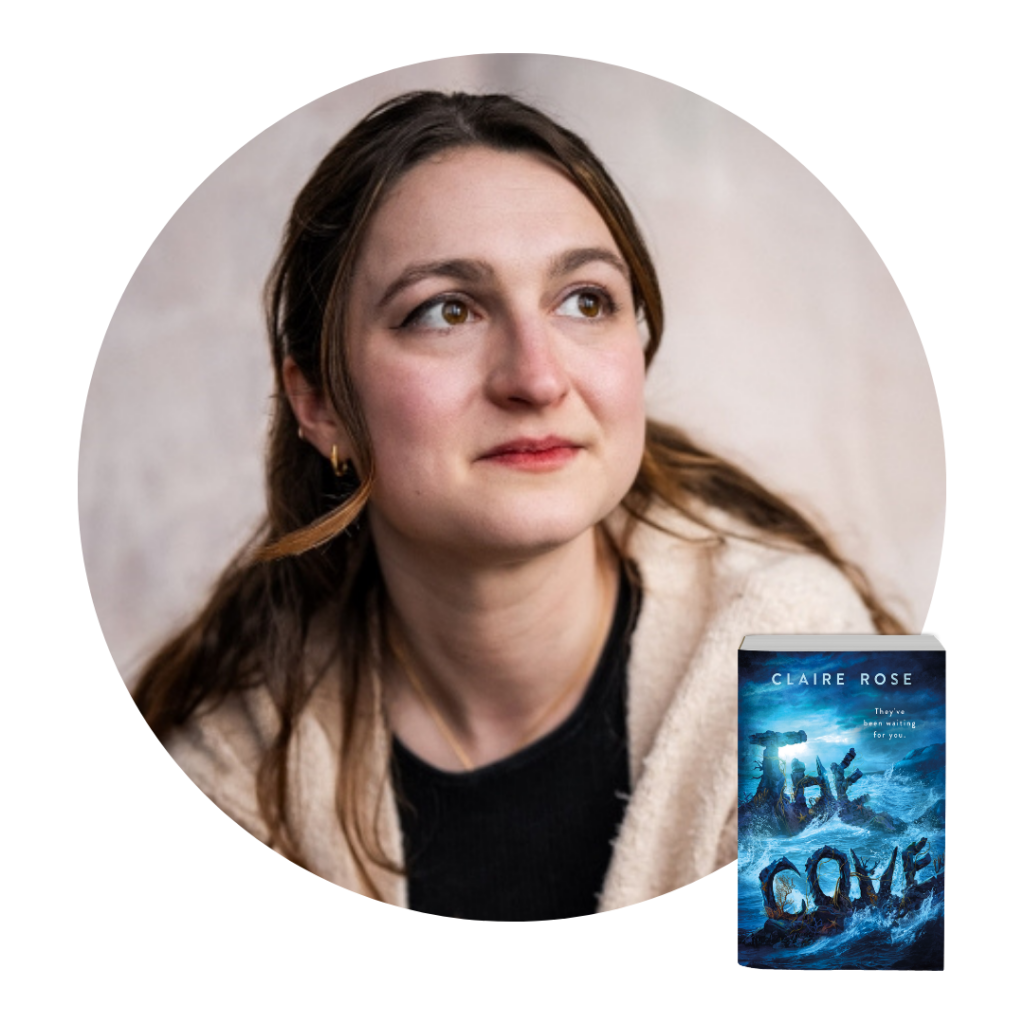
Claire Rose was born and raised in New Jersey but moved to the UK to study children’s literature and fell in love with horror instead. She is a queer Jewish writer who works primarily in the intersection of fantasy, horror, and literary fiction, and can usually be found in the nearest bookstore or coffee shop. A PhD student by day, she lives in Edinburgh with her haunted cats. The Cove is her first novel.